Well well well, we’re back! 😄
This blog might feel like a sequel to our last post on black holes… and you’re not wrong! 🚀 But today, we’re diving deep into something just as explosive—the supernova, the dramatic final act of a star before (maybe) becoming a black hole.
👉 Haven’t checked out that post yet? No worries! Catch up here:
🔗 What is a Black Hole?
💭 So… What Really Is a Supernova?
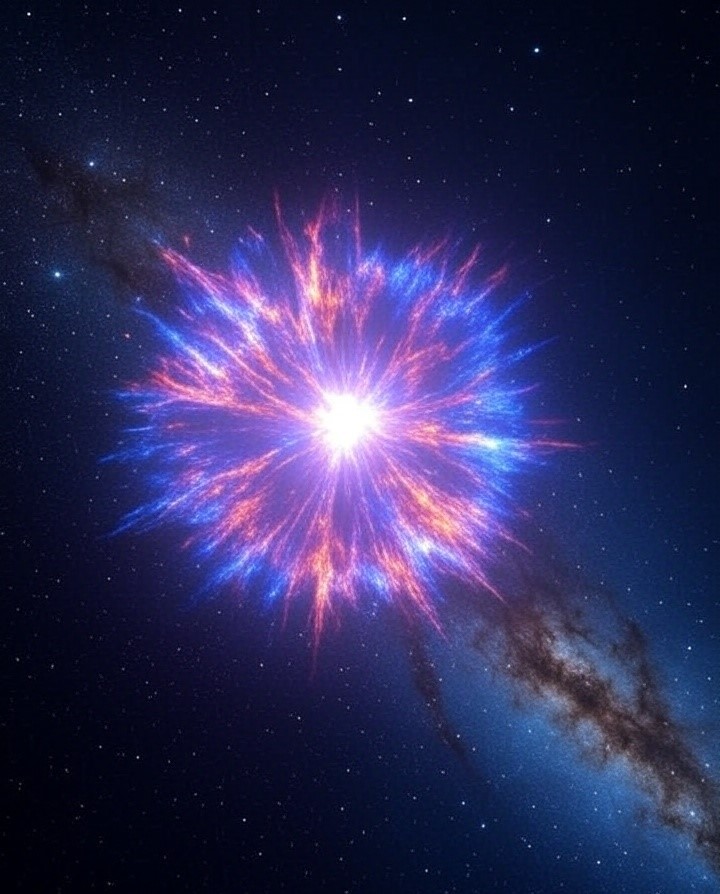
When a star runs out of fuel… BOOM! 💣💫
It explodes—the biggest explosion humans can ever witness. For days, sometimes months, this blast makes the galaxy shine brighter than ever 🌠✨.
But wait—what does “running out of fuel” actually mean? 🤔
🔥 Fuel? In Stars? Let’s Break It Down!
Imagine a car with fuel. 🚗💨 Stars are kind of the same.
At their core, stars burn a huge amount of nuclear fuel (we’ll explore this in future posts 🔬👀).
This burning creates outward pressure—pushing from inside like an inflated balloon 🎈.
But guess what keeps the balloon (star) from bursting? Gravity! 🌍💪 It pulls everything inward.
So, during its lifetime, a star is in a tug-of-war between:
- 🔥 Pressure pushing out
- 🌌 Gravity pulling in
This balance = a happy, glowing star 🌟
But when the fuel runs out… game over 😵
⚠️ The Endgame: Collapse & Explosion
Once the nuclear fuel is gone:
- No more pressure 😶🌫️
- Gravity wins 💣
- The star collapses inward, squeezed tighter and tighter…
Until… 💥 Explosion! — that’s your supernova!
Easy, right? 😅
🌬️ What Happens After the Explosion?
🎇 The supernova creates a glowing cloud of gas called a nebula.
Then comes the twist:
Based on the mass of the original star, it becomes either:
- 🕳️ A Black Hole (massive and mysterious!)
- 🌟 A Neutron Star (wait till you hear about this!)
🧠 What Is a Neutron Star?
Ready to have your mind blown? 🤯
A neutron star is:
- Just 20 kilometers across 🪐 (That’s like the size of a city!)
- But has the mass of our Sun 🌞
- Gravity? 200 BILLION times stronger than Earth! 🧲🌍
- It can rotate up to 700 times per second! 🌀⚡
Can you even imagine that? 😵
💬 Let’s pause here.
If you could visit a neutron star (safely 😅), what’s the first thing you’d want to test? Comment below! ⬇️
🧪 Still Not Done: Binary Star Supernova 🔁
There’s another kind of supernova too!
This one happens when:
- 🌍 A white dwarf (Earth-sized star) either collides with another star
OR - Steals too much matter from a nearby star 😈
💥 This also leads to a supernova—but no black hole or neutron star remains.
☠️ The star is completely destroyed!
💡 Final Thoughts
Aren’t stars dramatic? 😅
From quiet nuclear burning to sudden cosmic fireworks—supernovae are the universe’s most epic goodbye! 🌠💔
If you’re dreaming of becoming a scientist, this field has so many secrets waiting to be uncovered! Who knows—you might even land in school textbooks someday! 📚✨
(Just be ready for future students to grumble about your discoveries 😅)
🔍 What did you think about today’s topic?
Did something blow your mind? Or do you have questions buzzing in your head? 💬
Drop your thoughts in the comments below! Let’s talk space 🪐👽
I’m off to explore more cosmic mysteries…
🚀 Until next time—Tata & stay curious! 👋🌌
Leave a Reply